Most people think a kitchen “needs renovating” when the cabinet doors look dated. But in Dubai apartments—especially older towers and compact layouts—the bigger issue is often what you don’t immediately notice: damaged carcasses, poor ergonomics, and a setup that doesn’t match how you actually live.
If you’re debating whether to do a quick refresh or a full upgrade, these are the signs that usually matter most.
1) Your cabinet frames are water-damaged (not just the doors)
Cabinet doors are replaceable. Cabinet carcasses aren’t.
If you see:
swelling or bubbling around the sink base
softened MDF/chipboard edges
warped panels that don’t sit flush
a “musty” smell when you open the under-sink area
…you’re likely dealing with water exposure that has compromised the structure. Painting the doors won’t fix this. At minimum, the affected modules should be replaced—or you’ll keep fighting misaligned hinges and deteriorating panels.
Design takeaway: If the carcasses are damaged, plan around targeted module replacement, not surface-only changes.
2) The kitchen works… but it’s annoying to use every single day
This is the renovation trigger most people underestimate: usability friction.
Signs include:
nowhere to land groceries, kettle, air fryer, or coffee setup
cabinet doors clash with appliances or block walkways
you constantly relocate items because storage doesn’t match use
you avoid cooking because the flow feels cramped
Older builder-grade kitchens often look “fine” but weren’t designed for actual daily efficiency—especially in studios and 1-beds.
Design takeaway: If the kitchen doesn’t support your routine, you don’t need “new finishes.” You need a layout and storage logic upgrade.
3) Your appliances are the wrong scale for the space
In compact Dubai units (studios around ~300-450sqft), a full-size freestanding cooker and oversized fridge can quietly destroy the kitchen’s function. It’s not about luxury—it’s about fit.
Common mismatches:
a large cooker taking valuable counter space when you rarely use four burners
a standard oven when a compact combi (oven + microwave) suits your lifestyle better
a deep fridge that blocks cabinet swing or tightens circulation
Sometimes the renovation is not “tear everything out.” It’s right-sizing the appliance strategy.
Design takeaway: A kitchen can feel premium just by becoming more intelligent.
4) Bad lighting makes the kitchen feel cheaper than it is
Lighting is one of the fastest tells in a kitchen. Poor lighting doesn’t just look dated—it makes even nice finishes feel flat.
If you have:
a single downlight that shadows the countertop
cold mixed temperatures (blue ceiling light + warm under-cabinet strip)
no task lighting at the work surface
…your kitchen will never feel “high-end,” even after a cosmetic refresh.
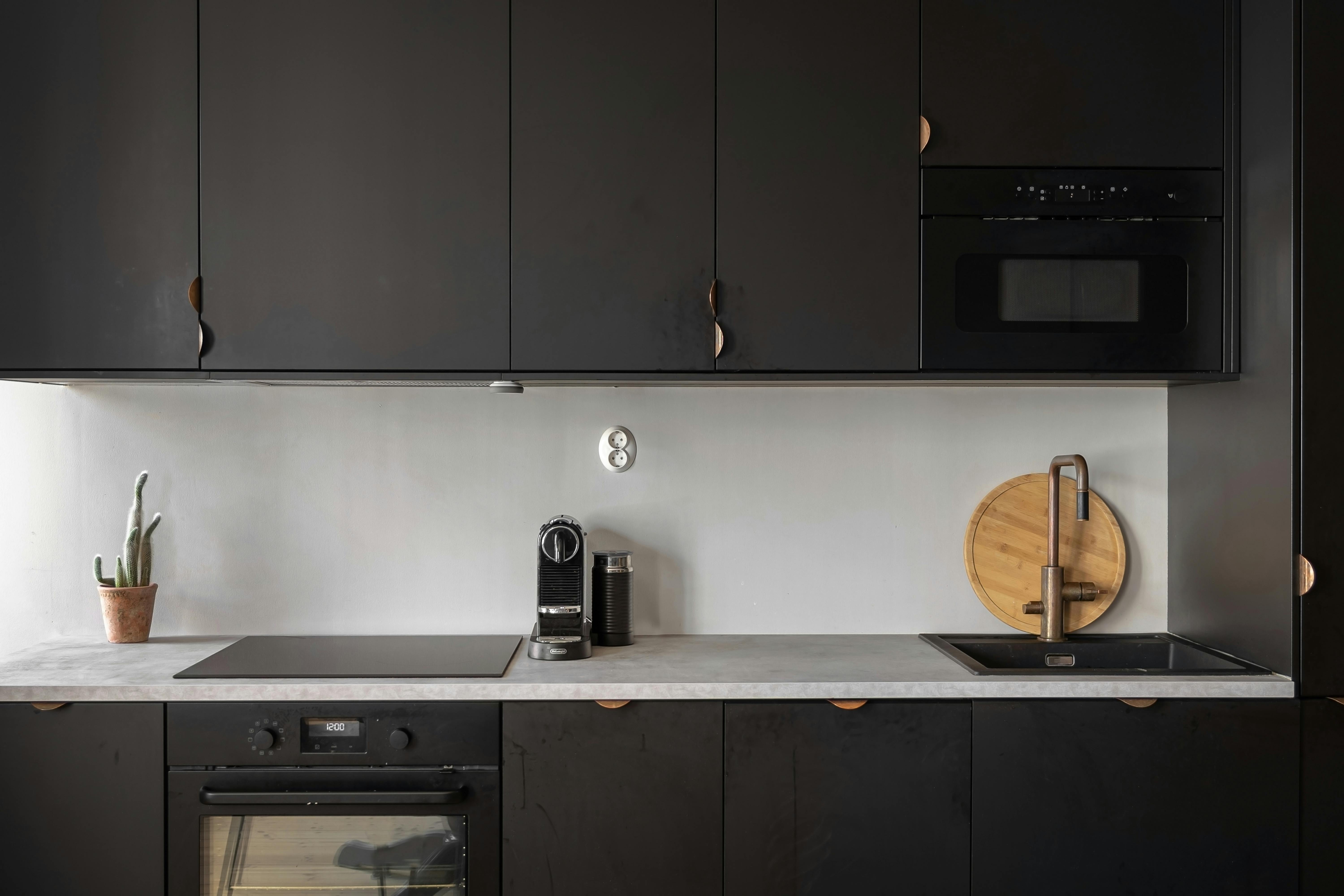
Design takeaway: Under-cabinet lighting + consistent temperature + better placement is often a bigger transformation than changing cabinet color.
5) The countertop and backsplash are doing the “most damage” visually
Some kitchens look dated because of one or two loud elements:
busy granite patterns that date the space
thick counter edges or shiny finishes that read builder-grade
old, stained grout lines
mismatched backsplash tiles
In these cases, you can often modernize without full demolition: swap the backsplash, re-edge or replace the counter, update sink/faucet, and instantly reset the room.
Design takeaway: Identify what’s actually driving the “dated” impression before replacing everything.
6) You’re dealing with persistent maintenance issues
Renovation isn’t always aesthetic—it’s operational.
Red flags:
recurring under-sink leaks, swollen kickboards, or repeated silicone failures
drawers that don’t glide properly due to warped modules
poor ventilation leading to grease buildup and stained ceilings
outlets and switch placements that don’t match modern usage
If you’re constantly fixing small things, you’re paying in time and frustration—often more than you realize.
Design takeaway: Small recurring issues usually indicate the kitchen has reached the end of its “patch it” phase.
7) The kitchen dates the entire property (especially if you’re selling or renting)
In higher-value homes, the kitchen is one of the first negotiation anchors.
Even if the rest of the unit is styled well, buyers/tenants see a tired kitchen and mentally subtract budget + hassle. In older prime towers, a “move-in ready” feel often depends on kitchens reading current, clean, and intentional.
Design takeaway: If the kitchen is dragging the perceived quality down, a renovation becomes a business decision—not an aesthetic indulgence.
Three tiers of kitchen renovation (price/complexity)
Not every kitchen needs a full rip-out. The right scope depends on what’s actually wrong.
Tier 1: Quick visual reset (lowest disruption)
Best when: the kitchen is structurally fine, but looks dated.
Typical moves:
replace handles + faucet + sink accessories
update backsplash (or regrout/clean if tile is good)
add under-cabinet LED task lighting
repaint walls, replace switch plates, tighten details
styling and organization reset
Outcome: “clean, modern, cared-for” without changing the bones.
Tier 2: Partial upgrade (high impact, still controlled)
Best when: usability is poor or select modules are compromised.
Typical moves:
replace damaged cabinet modules (usually sink base + nearby)
reface doors or change door fronts
new counter + sink + faucet
modern appliance strategy (right-size where needed)
lighting upgrade and storage improvements (pull-outs, dividers)
Outcome: feels “new kitchen” to most people, without full demolition.
Tier 3: Full renovation (highest cost, maximum change)
Best when: carcasses are failing widely, layout is wrong, or you’re reworking services.
Typical moves:
full demolition + new cabinetry
reconfigured layout (where possible)
updated plumbing/electrical points (where needed)
full appliance integration + ventilation upgrade
new floor/backsplash/counter as a cohesive system
Outcome: highest finish potential, but requires careful scope control to stay premium—not chaotic.
Want a quick recommendation on which tier fits your kitchen?
If you share a few photos + your floor plan (and how you use the space), we can recommend the right scope, so you don’t overspend on demolition when a smarter upgrade would do more.