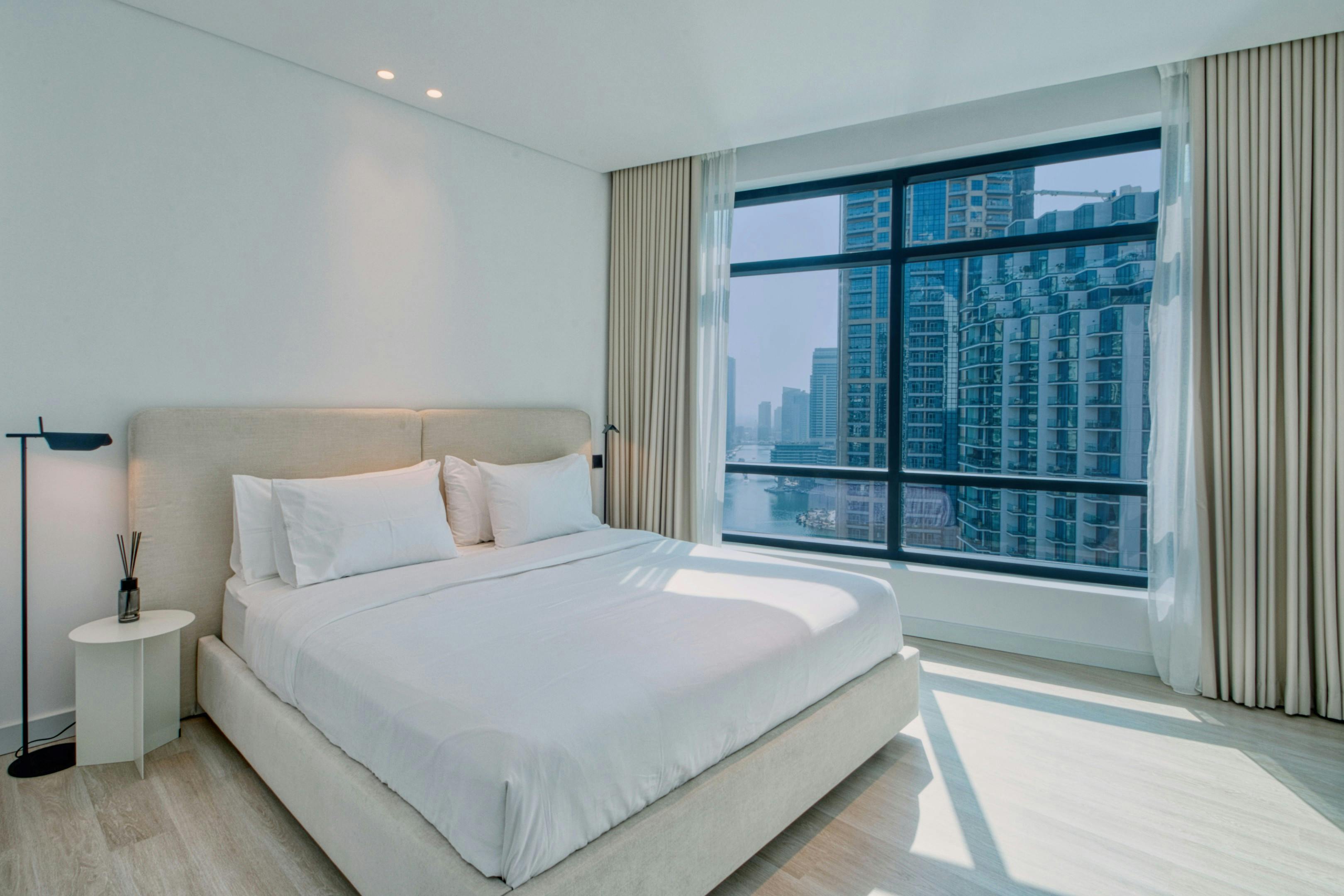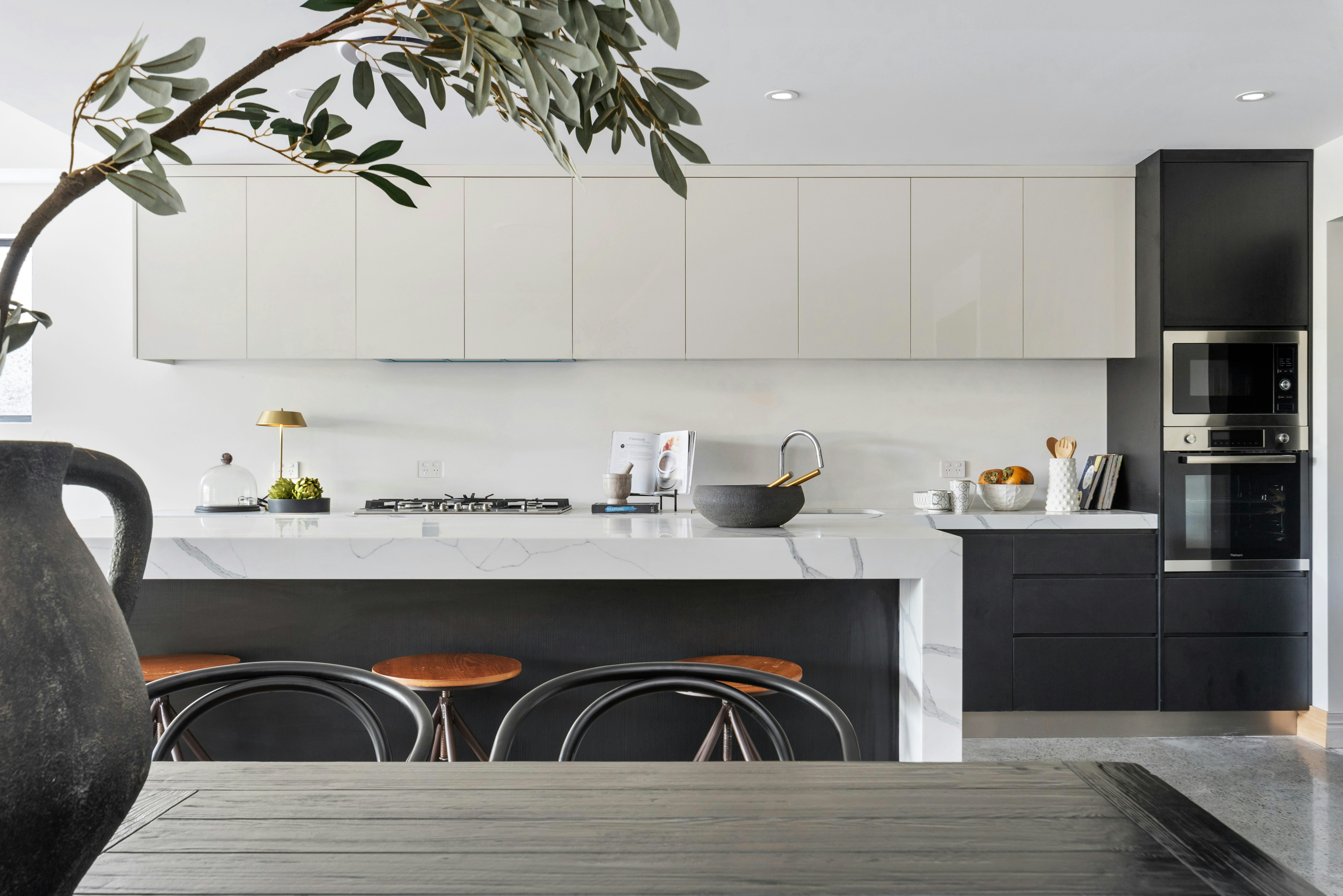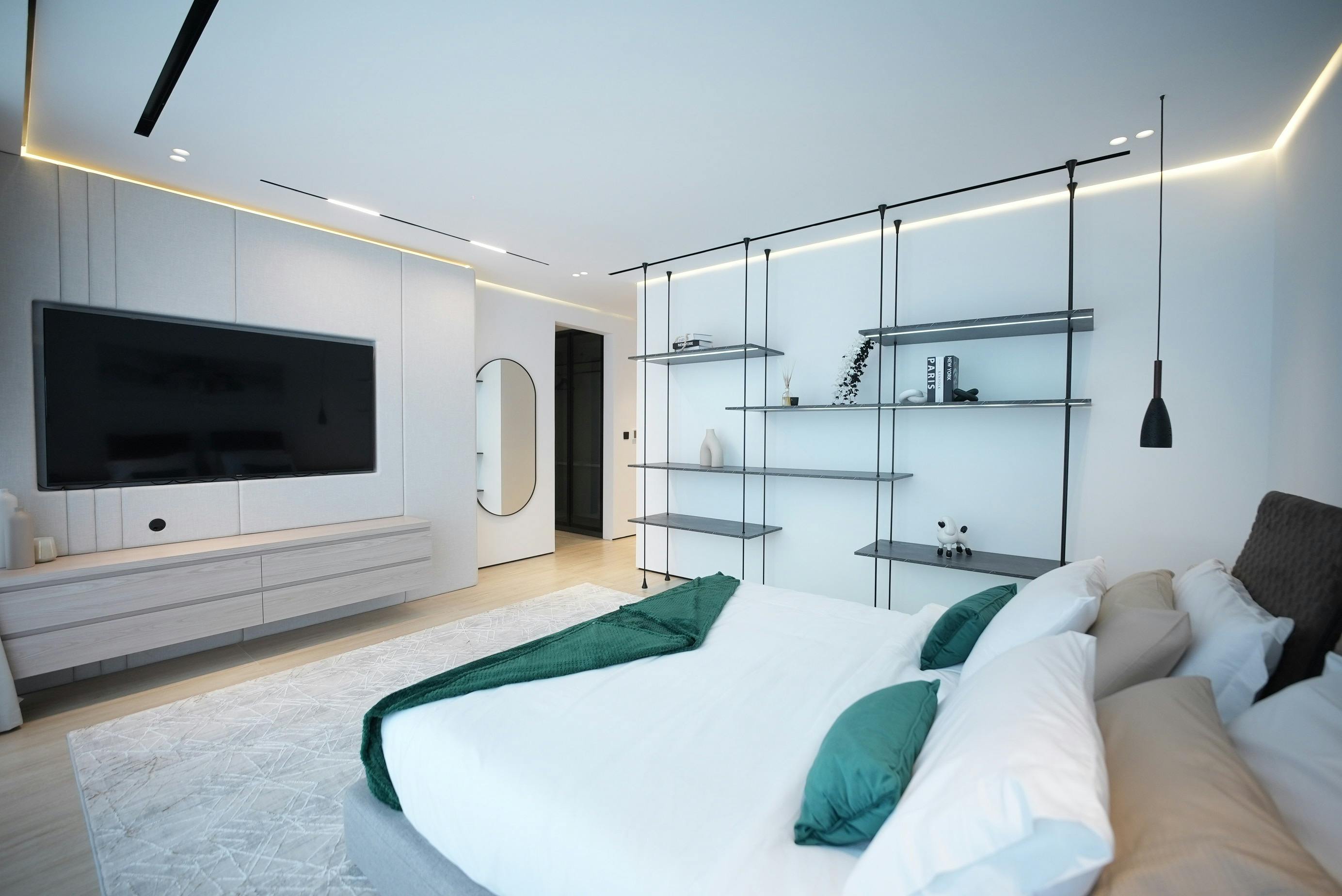
An empty Dubai apartment can feel deceptively simple: “Just buy furniture.”
But the difference between furnished and move-in ready is a system: layout logic, scale, lighting, sourcing discipline, and installation sequencing. Without that, people overspend, wait months, or end up with a home that looks fine in parts—but not cohesive.
This is the process we use at Desynte to take a space from empty shell to move-in ready—for both Dubai apartments and villas.
Step 1: Define the goal (live in it, rent it, or sell it)
Before we pick a sofa, we decide what “success” means:
End-user living: comfort, durability, storage, daily flow
Rental furnishing Dubai: photo-readiness, wear resistance, replacement-friendly pieces
Resale / staging: “premium perception,” cohesive palette, high-impact lighting and styling
This matters because the furnishing choices (and budget split) are different for each.
Step 2: Measure + map the layout (flow comes before style)
Most furnishing mistakes in Dubai come down to scale and circulation:
sofas that block pathways,
dining that’s too cramped,
bedrooms with no usable clearance,
oversized rugs that make rooms feel smaller.
We start with:
a furniture layout plan (with clear circulation)
zoning for open-plan living
anchor piece sizing (sofa, bed, dining, rugs, curtains)
Dubai apartment furnishing especially needs tight planning because many layouts look larger on paper than they feel in real use.
Step 3: Lock the concept (a cohesive system, not random shopping)
“Modern” is not a concept. Neither is “luxury.”
A concept should answer:
What’s the palette? (neutrals + one accent direction)
What’s the material story? (wood/stone/metals/textile)
What’s the vibe? (warm minimal, contemporary hotel, soft-modern, etc.)
What stays consistent across rooms? (so the home feels designed)
This is where we prevent the common problem: each room looking like it was sourced by a different person.
Step 4: Budget allocation (so you don’t overspend in the wrong places)
We assign a budget range per category and decide what must be “hero” vs “supporting.”
Typical “priority spend” items:
sofa (comfort + scale)
bed + mattress (daily life)
curtains (make ceilings feel taller, hide awkward windows)
lighting (often the biggest luxury lever)
dining (if the client hosts)
And we identify where to save without making it look cheap:
side tables, accessories, some storage pieces, secondary seating.
Step 5: Sourcing system (fast, curated, and compatible)
Dubai sourcing can be overwhelming: too many retailers, inconsistent lead times, and availability changes.
Our sourcing phase focuses on:
availability + lead time reality
cohesive finishes (woods/metals don’t clash)
substitute options (so delays don’t stall the whole install)
a structured shopping list that contractors/install teams can follow
For villas, we also plan by floor and staging zones so installs don’t become chaos.
Step 6: Lighting plan (the “expensive” switch)
If you want a home to feel premium, fix lighting early.
We typically cover:
consistent temperature across the home
layered lighting (ambient + task + accent)
feature moments in key zones (living, dining, primary bedroom)
practical lighting where people actually need it (mirrors, wardrobe zones, kitchen tasks)
A well-furnished space with bad lighting still feels unfinished.
Step 7: Ordering + logistics (where most DIY projects collapse)
Even if the design is perfect, execution fails when orders arrive out of sequence.
We create an install timeline:
paint/touch-ups first (if needed)
curtains/blinds measured early
deliveries scheduled by room priority
installers booked with buffer time
Move-in ready happens when the logistics are designed—not improvised.
Step 8: Installation + styling (the difference between “done” and “designed”)
This is where it becomes a home:
rug sizing and placement
art height and spacing
bedding and textiles that match the palette
accessories edited down (not cluttered)
“empty corners” resolved with purpose (plant, lamp, chair, or leave intentionally clean)
The goal is not to fill space. It’s to make the space feel effortless.
Step 9: Final walk-through checklist (so nothing feels half-finished)
We finish with a punch list:
lighting levels and bulb temperatures
alignment (curtains, frames, mirrors)
small fixes (handles, wobble, scratches)
storage usability
photo-ready reset (if for rent/resale)
This last step is what turns “furnished” into “move-in ready.”
What you get when the process is systemized
A home that:
feels cohesive across every room,
functions properly day-to-day,
is installed efficiently (less waiting, less chaos),
and looks premium in real life and in photos.
If you’re furnishing a Dubai apartment or villa and you want a faster, structured path to “finished,” this is exactly what Desynte is built for.