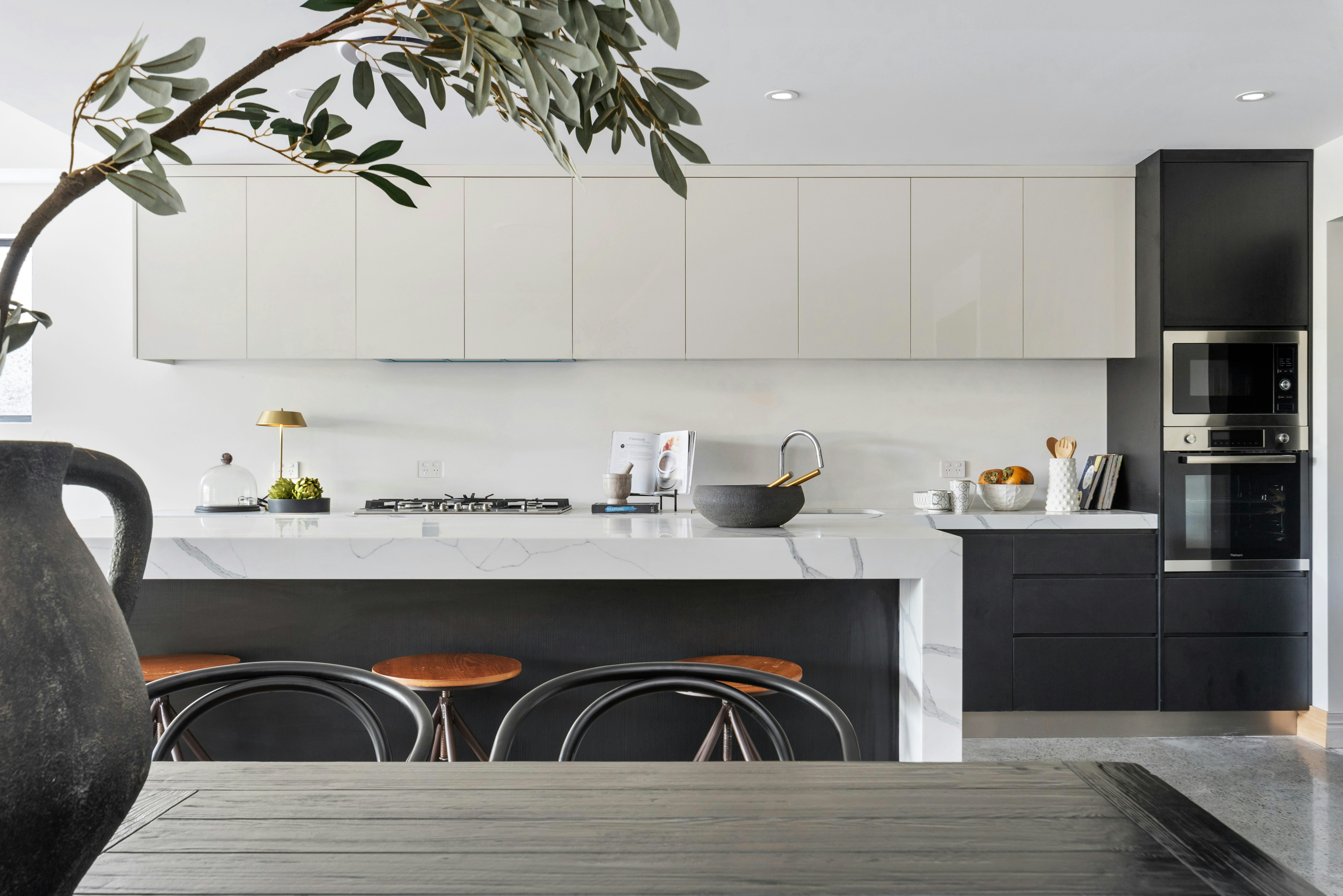
A dated kitchen doesn’t always need a full demolition to feel new.
In Dubai apartments especially, a “full reno” can quickly become expensive and slow: approvals, contractor timelines, dust, downtime, and big cost jumps for what is sometimes a mostly cosmetic problem.
The smarter approach is often a targeted kitchen upgrade: refresh the surfaces people see and touch every day, fix lighting, and modernize key details—without ripping everything out.
Below is a designer-led, cost-efficient framework for upgrading a kitchen without a full demo, including realistic methods (and what to avoid).
Step 1: Decide if the kitchen is a “refresh” candidate
A no-demo upgrade works best when:
cabinet carcasses are structurally sound (doors may be dated, but boxes are stable)
the layout works (or only needs minor tweaks)
plumbing and electrical are not major failures
you’re aiming for “move-in ready” and modern—not custom luxury joinery
You should consider deeper work if:
doors don’t align because the boxes are warped
there’s chronic swelling from leaks
the countertop is damaged and undermount sinks are failing
layout is fundamentally impractical (no prep space, poor clearances)
If the bones are good, a refresh can look shockingly new.
Step 2: The biggest lever: cabinet doors (three main paths)
Cabinet doors are the face of the kitchen. Upgrading them changes the entire impression.
Option A — Wrap/Vinyl (fast, clean, budget-friendly)
Best for: fast makeovers, rentals, resale upgrades
Pros: quick turnaround, huge color/finish variety, low mess
Cons: quality depends heavily on installer + edge finishing; heat/steam zones need care
Do it well:
choose a durable architectural-grade film
insist on clean edge wraps (no peeling corners)
avoid ultra-gloss unless the substrate is perfect (gloss shows every flaw)
Option B — Paint (mid-range, flexible, but execution-sensitive)
Best for: custom color, matte finishes, warmer “designed” look
Pros: can look premium if professionally sprayed
Cons: DIY brush painting will look cheap fast; chipping risk if prep is poor
Do it well:
spray finish (not brush)
proper sanding + bonding primer
durable topcoat (kitchens are abuse zones)
Option C — New doors only (highest-quality “no-demo” upgrade)
Best for: when you want a near-new kitchen without rebuilding everything
Pros: looks like a new kitchen if paired with new handles + hinges
Cons: higher cost; requires accurate measurements and good joinery alignment
This is the “best of both worlds” route if the boxes are good.
Designer note: If you can only afford one big move, choose doors over decorative changes.
Step 3: Hardware swap = instant modernization
Handles are cheap compared to kitchens—and they’re one of the highest ROI swaps.
Choose one metal direction (black, brushed nickel, champagne, etc.)
Keep it consistent across all doors/drawers
Don’t mix too many shapes (it looks messy)
If you want it to read premium:
use longer pulls on drawers
align placement precisely (crooked hardware kills the finish)
Step 4: Countertop upgrade (only if it’s dragging everything down)
If your countertop is visibly dated or damaged, it undermines every other upgrade.
If you’re staying no-demo, your options are:
replace countertop only (common, clean upgrade)
choose something durable + neutral (quartz looks clean and “current”)
If the countertop is fine, don’t touch it—spend money where it shows more.
Step 5: Backsplash: small area, big visual payoff
A backsplash is a controlled area that creates a “new kitchen” cue.
High-impact, cost-efficient choices:
simple subway tile (but done cleanly, not busy)
large-format slabs/tiles for fewer grout lines (reads premium)
neutral stone-look porcelain (practical + modern)
Avoid:
overly patterned mosaic (dates fast)
too many grout lines (looks busy and harder to keep clean)
Step 6: Under-cabinet LED lighting (the “this is expensive” hack)
If your worktop is dim, the kitchen feels old—even if it’s not.
Under-cabinet LED lighting:
makes the kitchen look newer immediately
improves function
photographs better (important for rent/resale)
Do it properly:
warm-neutral temperature (don’t mix warm/cool in the same space)
hide the LED strip (use a channel/diffuser so you don’t see dots)
avoid visible wiring
This is one of the most underrated upgrades in Dubai apartments.
Step 7: Sink + faucet swap (high-touch = high impact)
A new faucet and sink makes the whole kitchen feel cleaner and more intentional.
consider a deeper single bowl if you cook often
choose a faucet finish that matches your hardware direction
don’t mix finishes randomly (it reads chaotic)
Even if the cabinets stay, this can shift “tired” to “refreshed.”
Step 8: Appliances: align the “visual set”
You don’t need to replace every appliance, but you do need coherence.
Common issues that make kitchens feel cheap:
mismatched stainless shades
one new appliance next to one yellowed old one
visible gaps or awkward sizing
If budget is tight:
replace the most visible “offender” first (often oven or fridge)
use styling + consistent finishes to reduce mismatch
Step 9: The last 10%: styling and small fixes
These finishers matter more than people think:
aligned switches/sockets (clean plates)
repaint surrounding walls (kitchen greases and yellows paint)
consistent lighting temperature across the kitchen
tidy sealant lines (silicone, edges)
remove visual clutter (open shelving chaos reads cheap)
“Luxury” isn’t marble everywhere. It’s clean decisions and clean execution.
A simple budget prioritization (if you want maximum impact)
If you’re choosing what to do first:
Cabinet doors (wrap/paint/new doors)
Hardware swap
Under-cabinet LED lighting
Backsplash
Faucet + sink
Countertop (only if needed)
Appliances (as budget allows)
This sequence gives you the best “new kitchen” perception for the least disruption.
Want a kitchen that looks new—without living in a renovation site?
Desynte helps Dubai homeowners upgrade kitchens with a design-led, systemized approach: clear scope, fast concept direction, and execution-friendly decisions that don’t rely on full demolition to look premium.